

Price Match Guarantee

Order by 2:00 a.m., and we'll ship the same day

365-Day Return Policy
Price Match GuaranteeGET PRO PRICING
Washing Machine Maintenance Tips from Repair Clinic
01:43
This free troubleshooting video shows quick maintenance tips including checking and replacing your water hoses, adjusting leveling legs, and cleaning the door gasket for keeping your washing machine working safely and efficiently.
Water-fill hoses
Over time, the water hoses that came with your new washing machine may leak or burst. It's a good preventive maintenance practice to check these hoses from time to time for any sign of wear or weakness. Often there's a small blister in the rubber of the hose, which could rupture. Most manufacturers recommend replacing the hoses every 5 years.
Note... If the hose ruptures, large quantities of water could gush from the hose. If it's the hot water hose that ruptures, the gushing hot water may scald anyone nearby.
Leveling
Because your washer is so heavy, when it's not level, it can vibrate strongly during the spin cycle. If your washing machine is not perfectly level--with all four legs touching the floor--it can bang and rock back and forth, and even begin to "walk" across the room. This isn't good for the machine and may damage anything near the machine.
Your washing machine has adjustable, front leveling legs with a lock nut. You adjust the leg to the proper height, then tighten the lock nut up against the body of the machine to keep the leg from rotating.
Some washers have adjustable leveling legs in the rear also, and you can adjust them in the same way. Keep the machine as close to the floor as possible--the lower it is, the less likely it is to vibrate.
Most machines, however, have "self-adjusting" rear legs. You set these legs by tilting the entire machine forward onto its front legs (with the rear legs 3 to 4 inches off the floor) and then setting the machine back down. The legs should adjust automatically. If they don't, you may need to tilt the machine forward and rap on the rear legs with the handle of a hammer to loosen them--a procedure that's easier to accomplish with a helper.
Surface cleaning
Your washer has either a painted steel or porcelain-coated steel cabinet. It's perfectly safe to use a little dish detergent and a damp rag to clean all of its surfaces. If the surface is porcelain, you can even use a little non-abrasive cleanser for stubborn stains.
Lint disposal
Most washing machines collect lint during the wash cycle and send it down the drain during the drain cycle.
If your machine is a Maytag, though, it may be different. Most Maytag washing machines collect lint in the center tube of the agitator. You need to lift out that tube and clean it periodically. Other machines have a lint filter near the top of the tub, which you need to slide out, clean off, and reinsert.
If you're unable to find the information you need on our website, we suggest that you use a search online to find a reliable online repair forum. It's likely that your question has already been answered there. We also recommend contacting your product's manufacturer or calling a local repair technician.
And don't forget to like and comment on this video, and subscribe to our channel!
Maintenance tips for your washing machine
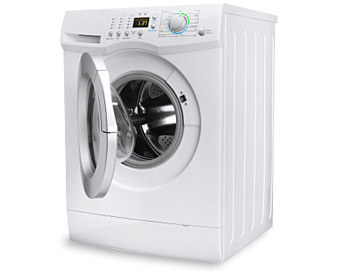
A washing machine (a.k.a. washer, laundry machine) provides an efficient way to clean loads of laundry including clothing and home textiles.
1Inspect the hoses.
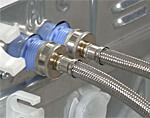
Check your washing machine’s water hoses for signs of wear or weakness a few times monthly year. If you discover any cracks or blistering, replace the hose. Any damage could cause a leak or burst – and extremely expensive flood damage in your home.
Most manufacturers recommend replacing the hoses every five years. For more peace of mind, use high-quality, stainless steel hoses.
2Prevent flood damage.
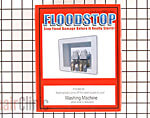
In the event that your washing machine’s fill hoses burst or water level switch malfunctions, you’ll have instant water damage in the room.
These two products can prevent this:
• Water Shutoff System
This water shutoff system prevents water damage by automatically shutting off the water flow when a malfunction is detected. Installation can be completed in five minutes. No special tools are needed.
• Washing Machine Overflow Pan
For smaller leaks and drips, this popular plastic pan fits beneath a washing machine and will protect a floor from water damage due to overflow and leakage. It has a fitting to accommodate drain line attachment.
3Don’t overload it.

Follow the owner’s manual’s instructions for appropriate loading sizes. Oversized loads will throw the machine off balance and that will lead to problems.
4Keep it level.
It’s abnormal for washing machines to vibrate the floor and walls of your laundry room. If your washing machine is not exactly level, with all four legs on the floor, it may rock back and forth and vibrate strongly.
It’s best to keep the machine as close to the floor as possible. The closer the machine sits to the floor, the less it will vibrate. The front legs are adjustable with a locknut. Position the legs at the desired height and tighten the lock nut against the body of the machine so that the legs cannot rotate. Some models also have adjustable legs in the rear, too. Follow the same process for adjusting those.
It is more common for machines to have self-adjusting rear legs. Ask someone to assist you with this. Tilt the machine forward on its front legs so that the rear legs are three to four inches from the floor. When you set the machine back down to rest all on all four legs, the legs should adjust automatically. If you find that they are not level, tilt the machine forward again and tap on the rear legs with the handle of a hammer to loosen them.
5Use the appropriate amount of detergent.
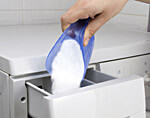
Regardless of what’s recommended on detergent packaging, follow your owner’s manual for the manufacturer’s recommended amount of detergent.
6Clean the inside once monthly.

It’s common for detergent residue to build up inside of washing machine tubs. Use a cleaner once per month to keep high-efficiency washing machines free of odor-causing residue.
7Clean out the fabric softener dispenser.
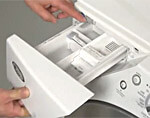
Gooey in nature, liquid fabric softener is known to gum up along fabric softener dispensers. Use a damp rag and hot water to clean the dispenser periodically.
8Polish the outside.
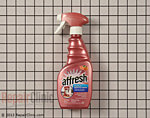
Spilled detergent, stain remover and fabric softener dry to a sticky mess. This all-purpose cleaner and a rag will make cleaning easy.
9Touch up gashes and scrapes with paint.
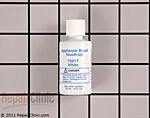
Prevent rusting by taking care of gashes and scrapes right away using touch-up paint.
Related Articles & Videos


04:16
Disassembly
LG Front-Load Washer Disassembly (Model #79640311900) – Washing Machine Repair Help


Our Story
Family-owned and operated since 1912, Burke America Parts Group is the longest-running genuine appliance, HVAC, and outdoor power equipment parts solution in North America. At Repair Clinic, we're proud to be an international brand trusted by the pros as well as the DIY community.
About Repair Clinic
© 2026 RepairClinic.com